
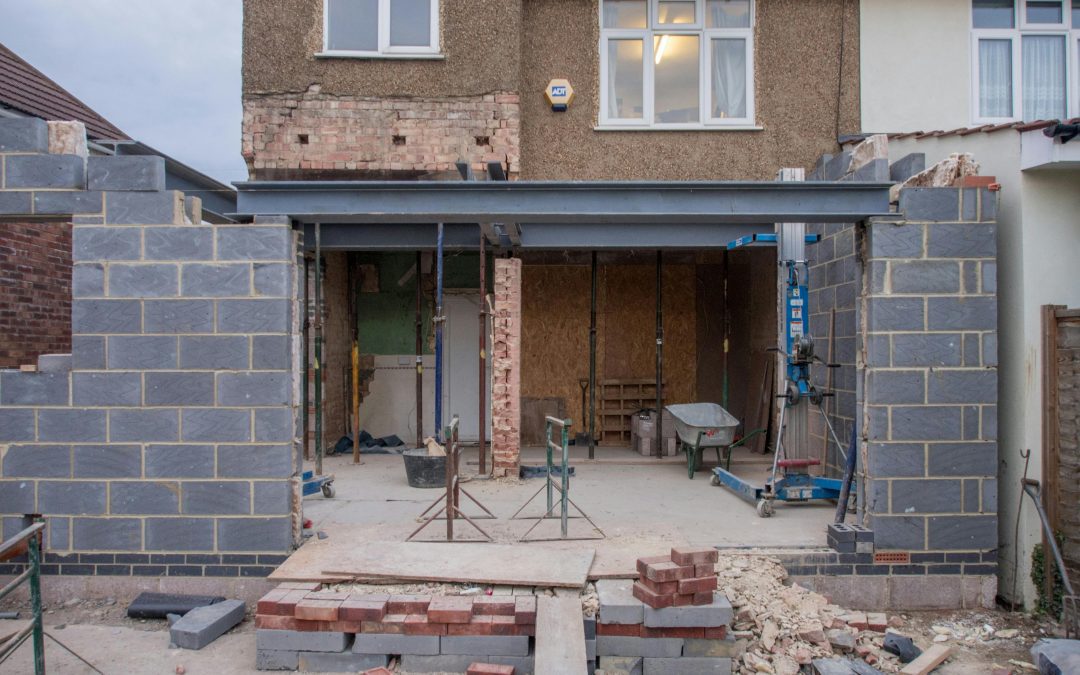
Home prices have soared so tremendously that many are now considering building a house in Ireland, but is it a good alternative to buying a second-hand or new-build home?
It’s been quite a while since we’ve felt the Celtic Tiger’s mighty roar. For well over a decade, it’s been dampened into a little meow, and we are all feeling the effects of the current housing crisis. High demand paired with a housing supply that struggles to grow can only mean one thing: ridiculously high asking prices. Forget about Dublin, forget about Cork County even, unless you’re willing to build your own home for a much more reasonable price.
It’s what many of our ancestors did, and it’s becoming increasingly attractive for families who have inherited land, rural buyers, or simply anyone looking for a more affordable alternative. Instead of wondering how to go about building your own home in Ireland, you might want to start thinking, “where do we start?” This practical, simple guide should give you a head start during the early stages of building a house in Ireland.
Is Building Your Own Home in Ireland Actually Achievable?
If you’ve pondered building your own home rather than going the route of buying one, which is quickly becoming an unattainable reality for many, unfortunately, you may be worried about the practicality of doing so. Rest assured that self-build homes are very common in Ireland, especially in rural areas and outside of cities like Dublin, Cork, and Galway.
In 2024 alone, over 30,000 new dwellings were added to Ireland’s housing stock, with a growing share being self-builds. County Cork, in particular, is drawing many applications for self-build projects thanks to its good mix of rural land, idyllic commuter villages, and a sprawling coastline. It’s now one of the trendiest places to self-build in all of Ireland.
Before we get ahead of ourselves, let’s first take a quick look at the pros and cons of self-build projects:
Pros of Self-Build Homes in Ireland
- Full design control, including layout and finish
- More cost-efficient than buying new or second-hand (generally)
- Meet modern energy standards right from the get-go
- Built exactly to your family’s requirements
Cons of Self-Build Homes in Ireland
- Longer process than buying an existing home
- Requires significantly more project management
- Can lead to cost overruns if not carefully planned in advance
- NOT a suitable DIY project as professional input is essential throughout
The Self-Build Process in Ireland – Step by Step
If you’re in the early planning stages of a self-built home in Ireland, here’s a step-by-step walkthrough so that you know what to expect:
Step 1: Choose Your Build Site
This may already be chosen for you, e.g. you’ve inherited land from a family member. Otherwise, you’ll need to purchase a vacant plot of land. In either case, you will need a solicitor who can confirm that the title is clear before proceeding any further.
Step 2: Consult an Engineer Early
This is perhaps one of the most essential steps to emphasise. Engaging a qualified engineer early on is crucial. Engineers can assess the feasibility of your project, including your preferred design(s), budget constraints, and all of the technical aspects of construction. Do not wait until later on and bring an engineer into the project at your earliest convenience.
Step 3: Apply for Planning Permissions
Practically every new home in Ireland requires planning permission from the local planning authority. You should endeavour to attend a pre-planning meeting with your local council before submitting your planning application, containing all relevant drawings to support it. An engineer can assist with this important phase.
Step 4: Secure Financing
With a self-build, you won’t be applying for a traditional mortgage. Instead, you’ll need a self-build mortgage in Ireland, unless you have sufficient capital to fund it completely. These mortgages are drawn down according to construction milestones, not a lump sum. For more in-depth information on funding, consider the First Home Scheme for new builds.
Step 5: Project Design and Tender
With planning permissions secured, you can get to work on securing a contractor. You’ll need detailed construction drawings prepared by a competent engineer. These drawings are sent out to tender with selected contractors. Your engineer will ensure that the project specifications are accurate and compliant to code and standards, and they can further assist by making sure that the tender process is fair and competitive so that you get a good contractor at a fair price.
Step 6: Construction and Sign-Off
Your contractors can now begin to put that proverbial first spade in the ground and get cracking with your brand-new home. You’ll need to make sure that the home is registered with the Building Control Management System (BCMS).
Furthermore, an assigned certifier (typically an architect, engineer, or building surveyor) should arrange for inspections at key stages of the development. These usually include: after laying the foundation, applying damp proofing, roofing, first fixes, and final completion. Once the build is complete and fully compliant with all relevant Irish regulations and approved plans, a Completion Certificate is issued.
How Much Does It Cost to Build a House in Ireland?
The cost of building a house in Ireland will naturally vary, and often by quite a bit, depending on many factors. This is just like buying an existing home, except that, all other things held equal, the final cost can be quite a bit lower than buying.
Perhaps the single best method of calculating the cost of a new build is to multiply the total floor area (in m2) by the cost/m2 from reliable statistics from the Society of Chartered Surveyors Ireland (SCSI). As of 2024, they estimate the €/m2 for a semi-detached dwelling in County Cork at around €2,720 and around €2,980 for a detached dwelling. Outside of Cork City, costs for a standard specification house might be around €2,000–€2,500/m² in current market conditions.
Moreover, you’ll need to consider the costs of building a timber frame vs a block construction. The former is generally faster and cheaper to build, and it’s becoming increasingly popular for energy performance. The latter will generally last longer and offers superior insulation but tends to cost more since it takes longer to build.
Make sure to account for professional fees from an engineer, architect, quantity surveyor, solicitor, and so on. These are necessary, and they’re often given as a percentage of the total cost. You should also make sure that any construction estimate contains a contingency of around 10% to 20% for unexpected costs that may arise. Lastly, be sure to include the mandatory VAT of 13.5% for construction costs in Ireland.
While online calculators can give you a good, rough idea of how much your new build may cost, they are nowhere nearly as accurate as what you’ll get from a professional construction estimate prepared by a quantity surveyor.
Timber Frame vs Block: Which Is Right for You?
With few exceptions, your new house design will fall into one of two broad categories: timber frame construction or block construction. Both are excellent when built by a competent contractor, but they each have their own unique advantages you should consider:
Timber Frame
Timber framed houses in Ireland are quickly becoming favoured by many first-time homebuyers, and their popularity has reached the mainstream. These homes can often be framed in a matter of days, and total construction time is often drastically shorter than block construction. This cuts down on labour, which in turn can make them more affordable.
Timber homes can offer excellent thermal insulation performance but note that they tend to require more careful moisture management during construction. Moreover, as of May 2025, Ireland’s Fire Safety Regulations have undergone a thorough overhaul which directly affects timber frame construction.
Block/Masonry
A truly traditional Irish construction method, block or masonry construction can stand the test of time, as evidenced by the many old block construction homes that have stood here in Cork City and surrounding communities for centuries. Local tradespeople tend to have a good understanding of block construction techniques, so it’s familiar and these tradespeople often have considerable experience with it.
On the other hand, it is quite a bit slower in terms of project timelines. Framing will take longer, but in exchange, you get a home that has excellent thermal mass and sound insulation, great longevity and durability, and it’s possible to achieve a BER A rating with a good insulation specification.
Timber Frame vs Block: Which is Better?
Which type of home is best for your family? Well, in all likelihood, the decision will come down to your personal preference, your budget, suitability of the site, and the availability of local tradespeople. An engineer can advise you on which type of construction is the most feasible, which can help you narrow down your choice.
Passive House and Energy Standards – What Self-Builders Need to Know
A new build home must meet several standards, notably energy standards which have changed quite a bit over the years. Since 2019, Part L of the Irish Building Regulations now requires new homes to essentially have an A-rated BER to be compliant. Part L is concerned with Nearly Zero Energy Buildings, which relate to the conservation of fuel and energy. You can learn more about these at SEAI.
Self-builds are perfectly positioned to meet these standards and be considered “passive houses.” A passive house in Ireland is an ultra-low energy consumption house that satisfies several criteria for energy conservation and sustainability. These include high-performance insulation, airtight construction, and mechanical ventilation with heat recovery. For many new builds, modern heat pumps, solar photovoltaic (PV) systems, and high-performance window glazing are becoming standard features, and it’s often much cheaper and easier to design these from the beginning than to retrofit them later on.
For several of these features, SEAI grants are available (such as the Solar Energy Grant scheme), which can cover a large chunk of the initial investment.
Why the Engineer’s Role in a Self-Build Matters More Than You Think
Throughout every step of the process of a self-build home construction project, an engineer is vital. Unfortunately, many self-builders underestimate the importance of an engineer throughout the process, only engaging one at the end of the project sign-off.
A qualified and licensed engineer can end up saving you a substantial amount of money by making sure that everything is in order before costly mistakes are made. They can assist with site assessment and feasibility in the early planning of the project, prepare drawings and support with planning applications, assist with structural design of key elements like the foundation, floors, structural walls, and roof, ensure proper specification of all building materials and systems, and provide in-person inspections at key construction milestones in compliance with BCMS requirements.
Furthermore, engineers can issue important documentation such as certificates for mortgage state drawdowns, as well as a final completion certificate once the house is fully built and ready to be handed over to you.
Don’t leave out an engineer until the very end of the process! They’re professionals who ensure that your home is on track, within budget, and fully legally compliant from day one.
Build Your Dream Home in Cork with BCE Consulting
Building your very own home from the ground up can be quite exciting, but it can be equally stressful if you don’t know where to start. It does have its fair share of challenges, but they’re all manageable and the end result is immensely rewarding. When you’re working with a good team of engineers right from the start, it’s a lot more manageable and a lot less stressful.
If you’re in the early planning stages for a self-build home in Cork, contact BCE Consulting for a no-commitment, no-stress consultation. Come to us with your ideas and we’ll give you clarity and walk you through the steps of a self-build, all in easy-to-understand terms and language.

Recent Comments