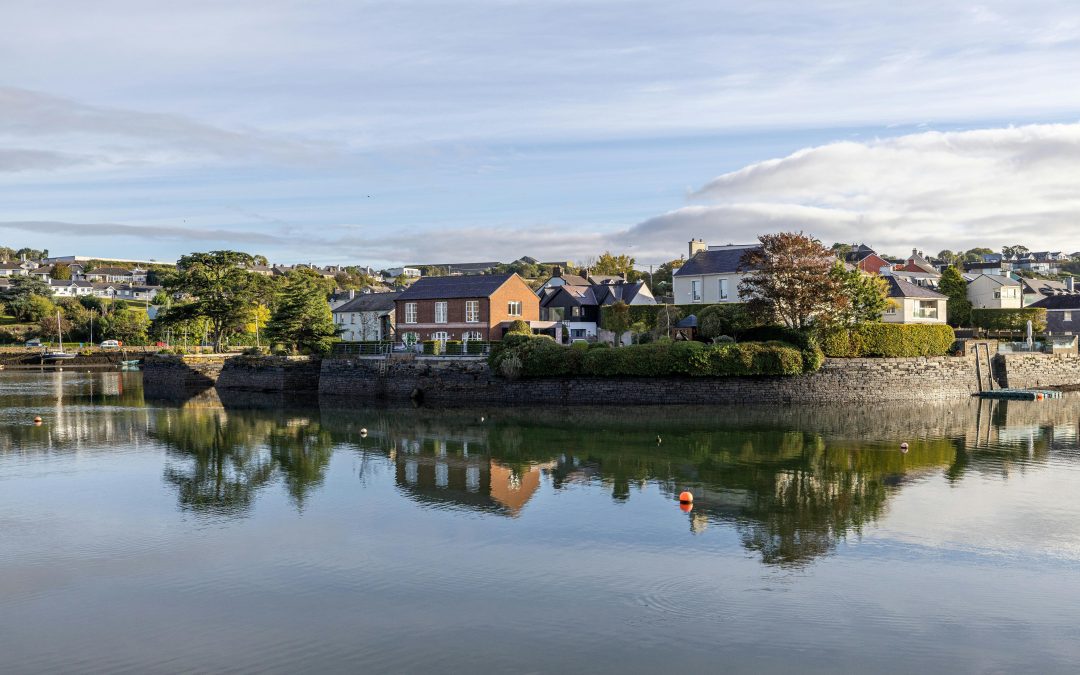
Cork and water have always had a complicated relationship. The city was, quite literally, built on it.
The central part of the city sits on an estuarine island in the Lee Valley, flanked by steep slopes on two sides and divided by the river’s two channels. It’s a beautiful setting. It’s also a geography that makes Cork uniquely vulnerable to flooding, and that vulnerability is written right through the city’s history. Between 1841 and 1988 alone, Cork recorded 292 flood events. This is not a new problem. It’s a defining one.
If you’re buying a property in Cork city or county, or you already own one, understanding flood risk isn’t alarmism. It’s just good sense.
The Two Types of Flooding That Affect Cork
Cork doesn’t just face one kind of flooding. It faces two, and the combination is what makes the city’s situation particularly complex.
Fluvial flooding comes from the River Lee breaking its banks after heavy rainfall upstream in the catchment. The Inniscarra and Carrigadrohid dams upstream of the city help regulate river flows, but they can’t eliminate the risk entirely. November 2009 proved that. After weeks of exceptional rainfall saturating the catchment, the city flooded on a scale not seen in nearly a century. The Carrigrohane Road, Victoria Cross, parts of UCC, the entire Mardyke, Washington Street, the Grand Parade, North Main Street, Wandesford Quay, Lancaster Quay, Sundays Well, and the Sarsfield Road Roundabout were all under water. Insurance payouts from the 2009 floods came to approximately €90 million, and that figure doesn’t capture the full cost of what was lost.
Tidal flooding is caused by storm surges and spring tides pushing water up the Lee estuary and into the city centre. In October 2020, a storm surge coinciding with spring tides produced some of the worst tidal flooding in Cork in a decade. The South Mall was described as a lake. Water cascaded down Oliver Plunkett Street and up through the surrounding side streets. Around 100 buildings were damaged, with costs running to millions of euros. And that event happened during a global pandemic, when businesses were already fighting for survival.
The combination of both flood types, fluvial from the west and tidal from the south, is what makes Cork’s flood risk genuinely difficult to engineer a solution for. But the work is underway.
What’s Being Done: Morrison’s Island and the Lower Lee
Cork is actively investing in flood defence right now, and it’s worth understanding what’s happening and what it means for the city.
The Morrison’s Island Public Realm and Flood Defence Scheme is currently under construction and on track for completion in late 2026. Once finished, it will protect around 400 properties in an area that has repeatedly suffered from tidal flooding, while transforming the riverside between Parnell Bridge and Parliament Bridge with new public spaces, a riverside promenade, and improved pedestrian areas.
The engineering here is worth appreciating. The existing quay walls are being cleaned, inspected, and strengthened. Flap valves are being fitted to all river outlets to stop water flowing back up through drainage pipes at high tide. An underground pumping station is being built at Parnell Plaza. Even the street furniture has been designed with purpose: planters and seating along the quays will double as flood defences, with demountable barriers that can be installed when extreme flooding is forecast.
Morrison’s Island is, however, just one piece of a much larger picture.
The Lower Lee Flood Relief Scheme is designed to protect some 900 homes and 1,200 businesses across the wider city from flooding. It is the largest flood relief investment ever proposed in Ireland. Its total cost has risen to approximately €200 million, and the scheme is expected to be submitted for statutory consent in 2026, with construction following thereafter.
These are significant, genuinely ambitious undertakings, and a real commitment to protecting Cork’s future. But large infrastructure projects take time. The flood risk is real today, and it matters most right now for anyone buying or selling property in the city.
What This Means if You’re Buying a Property in Cork
Flood risk is not uniform across Cork. Some areas carry significantly higher exposure than others: low-lying quaysides, properties near the Lee and its tributaries, parts of the docklands, and lower-lying suburbs including parts of Blackrock, Mahon, and Douglas. The question isn’t whether Cork floods. It’s whether the specific property you’re considering is in the firing line when it does.
A few things every buyer should know:
A mortgage valuation will not flag flood risk. It confirms a property’s value for lending purposes. It is not a structural or risk assessment, and it will not tell you whether the garden was under a foot of water in 2009 or 2020.
A pre-purchase survey carried out by a qualified engineer should include an assessment of flood risk indicators: evidence of previous flooding, proximity to identified flood zones, the condition of drainage, and any flood mitigation measures already in place. These are things a trained eye can spot that a standard valuation will never pick up.
The OPW Flood Maps are publicly available at floodinfo.ie and are worth checking for any property in Cork before you proceed. They’re a useful starting point, but they show community-level risk rather than individual property risk, and they should always be read alongside professional engineering advice rather than instead of it.
Properties in identified flood zones can face real challenges with home insurance costs, mortgage approval, and future resale value. Ireland doesn’t operate a state-backed flood reinsurance scheme like the UK’s Flood Re model, which means access to affordable flood cover is ultimately at the discretion of individual insurers. A buyer deserves to know all of this before signing contracts, not after.
If you’re planning a new build or an extension in an area with flood risk, planning permission will require a flood risk assessment as part of the application. An engineer can advise on whether this applies to your site and prepare the necessary documentation.
Cork is Worth Investing In
The home offices for BCE are based at the Cork Marina, on the banks of the Lee. Flood risk isn’t an abstract concept for us; it’s something we’ve watched play out across this city for years.
Cork is a city worth investing in. The flood relief works underway are a genuine reason for optimism, and the scale of the Lower Lee scheme reflects just how seriously the state is now taking this problem. But smart buyers and homeowners don’t wait for major infrastructure to complete before doing their homework.
If you’re buying a property in Cork city or county and you want an independent engineering assessment that includes a thorough flood risk evaluation, get in touch with BCE Consulting Engineers today. A pre-purchase survey could be one of the most valuable investments you make before you sign anything.
Buying a house in Ireland right now is, without a doubt, very difficult. High demand and fierce competition paired with a stagnant housing supply results in high prices, bidding wars, and long queues for in-person tours.
For first-time homebuyers in Cork or elsewhere in Ireland, careful planning is a must if you want to get a head start on the competition. Knowing what to expect in the house buying process in Ireland can save you time, money, and headaches, which is why we’ve put together this list of the key steps to buying a house in Ireland. As consulting engineers based in Cork, we hope that every prospective homeowner is armed and ready with these helpful tips.
Work Out What You Can Actually Afford
The first and perhaps one of the most important steps to buying a house in Ireland is to purchase within your means. Be reasonable with yourself and your expectations and be realistic. Of course, finances are closely linked with the location of the property, so it’s also a good idea to make some basic decisions about locations here.
Assuming you will purchase with a mortgage loan, work out how much your monthly repayments will be, and don’t forget to account for additional maintenance and repair costs. Most buyers eligible for a mortgage loan can expect around 3.5x their gross annual income from Irish banks, but a 10% deposit is typically required. E.g. for a house costing €350,000, the buyer must pay €35,000 (10%) up front.
If you’re a first-time homebuyer, consider the Help to Buy scheme and/or First Home Scheme. If you meet the eligibility criteria, you could save tens of thousands of euros.
You should also try to remember that any time you see a listed selling price, add on a few % to account for additional and necessary costs, such as solicitor fees, Stamp Duty, property valuation fees, and moving costs. It varies, but usually, it’s a few thousand euros you must have ready in addition to the purchase price.
Get Mortgage Approval in Principle
Working out the “napkin maths” of home purchase costs in Ireland is a good start, and it’s enough to fidget around with mortgage rates and terms. Once you’ve narrowed down your budget a little more and perhaps have started viewing some properties, you should start to be a little more specific with mortgage calculators (most major banks have free online mortgage calculators) and applying for an Approval in Principle (AIP).
An AIP is a lender’s preliminary indicator, telling you how much they’re willing to lend. It’ll remain valid for about six months and can help you stick within a realistic budget. Estate agents take them more seriously, putting you in a better position when making offers. You typically need to show documentation including payslips, bank statements, proof of deposit, and employment details to request mortgage approval.
Lastly, banks and other financial institutions are mortgage lenders, and they do offer different rates and terms, so it’s worth shopping around.
Find Your Property
Surely as a homebuyer, you’re already using (or should beusing) Daft or MyHome to find your ideal property. But are you tapping into local knowledge and expertise? Local estate agents can give you a much better impression of a particular neighbourhood’s market dynamics, realistic selling prices, and potential.
Furthermore, are you certain that the selling price is within reason for a particular home? The Property Price Register can give you exact historical data on how much your desired home, and/or those within the area, have sold for.
Keep in mind that homes sold in Ireland must have a Building Energy Rating (BER). Energy efficiency is quite valuable nowadays, so higher BER-rated properties may be more desirable.
Don’t neglect the costs of remodelling and renovation, either. Old homes may sometimes be quite cheap, but you could be looking at tens (or even hundreds) of thousands of euros to make the home habitable.
Make an Offer
Once you’ve narrowed down a desirable home in a desirable location at a reasonable listed price, and ideally with a mortgage Approval in Principle, you’re well-prepared to start making offers.
But before you come out guns blazing, keep in mind that in Ireland, offers are not legally bindinguntil contracts are signed. Buyers can withdraw at any point, for any reason, before the contract is signed.
Set a price ceiling and stick firm to it, but on the other hand, be willing to negotiate fairly with the seller. Remember that the home’s selling price takes into account the visible, stated condition of the home. We’ll touch on this more in our next point, and it’s important because the way a house looks doesn’t always reflect the actual condition!
Once the seller agrees to an offer, you’ll have to pay a booking deposit to your estate agent to secure the sale. This can be refunded up until the signing of the contract. Inform your solicitor at this stage.
Commission a Pre-Purchase Survey
The three biggest factors in the price of a home in Ireland are location, location, and location. Assuming you’ve followed the above steps, you already have that secured. Now, when it comes to assessing the value of a home, one of the biggest mistakes to avoid is to assume that a house’s stated condition (reflected in the price and the mortgage valuation) is the same as its actual condition (not necessarily reflected in the price).
In Ireland, caveat emptor “buyer beware” is the norm in real estate. Legally, the buyer is responsible for the home, including remediating any faults or defects which could have been inherited from the seller. Given that some repairs (e.g. roofing, framing, or even foundations) can easily cost tens of thousands of euros, and many of these faults may be invisible to the naked eye, how can you avoid being stung by a slew of costly repairs on your new home?
The answer is quite simple: Pre-Purchase Surveys from qualified surveyors and engineers. These surveys differ from mortgage valuations because they look at the actual conditions of a property and all of its elements, e.g. dampness, mould, rot, structural stability, roofing, plumbing/electrical/HVAC, presence of unauthorised modifications, and much more.
Thousands upon thousands of homes in Ireland, especially older homes, are full of faults and defects. Many may be cosmetic or simple home improvement projects, others may be extremely costly and necessary for safety and to bring the home into compliance with Irish standards and local council authorities.
The pre-purchase survey allows homebuyers to negotiate a fairer price with the seller, request that works take place as a condition of the purchase, or simply to walk away from a bad deal altogether. These surveys cost very little compared to the potential cost of repairs, not to mention the headaches or even the health hazards that could be present in the home.
These surveys are for second-hand homes, but if you’re buying a new build, you should consider retaining a Snag List Inspection instead.
The Legal Process of Buying a Home
This particular step can appear daunting to a first-time homebuyer in Ireland, but it doesn’t need to be. A solicitor is necessary when buying (or selling) a home in Ireland, and they’ll look after the essentials, but they are also quite helpful in various stages of the transaction (conveyancing) process.
Firstly, your solicitor will help you review the sale contract, conduct title searches, and can identify any legal issues with the property (e.g. covenants). In other words, they’ll make sure everything’s good to go.
Your 10% deposit is due when signing the contract with the seller. The contract, once signed, is legally binding and it formalises the sale. Your solicitor will then finalise the process by going through the closing process, doing title checks, transferring funds, and helping with mortgage drawdown. On closing day, you receive the keys to your new home and the funds are transferred.
Getting the Keys
With keys in hand, the property is now yours and it’s certainly an appropriate time to celebrate and to organise a housewarming party! Before getting too carried away, however, try to get a few things done after moving in, and the sooner, the better.
First, make sure that you change the locks and have new keys cut. Set up accounts with local utilities (water, gas, electric), internet provider, and home insurance. Change your registered address with Revenue, your bank, electoral register, and notify others of your new address. Make sure to register for Local Property Tax, too.
Buy Your Home with Confidence and Peace of Mind
While looking for a new home in Ireland can be quite exciting and definitely stressful, it doesn’t need to come with the added stress of moving into a home riddled with costly repairs that now fall on your shoulders.
Buying a home isn’t something we do every day; it’s one of the single biggest financial decisions of our lives. Following the steps to buying a house in Ireland gives you a head start, while retaining a pre-purchase survey or snag list gives you confidence and peace of mind that the property’s listed price fairly represents its actual condition. BCE Consulting Engineers can assist with professional pre-purchase surveys and snag lists before contracts are signed, empowering homebuyers in Ireland.
With Cork’s rich history and its modern appeal, it should come as no surprise that many individuals are looking into buying a period property in Ireland. Many historic homes in Cork City and County are indeed quite charming, and living in them can give homeowners a sense of permanence, being rooted firmly in the land and history of an area in a way that many new builds may not.
There’s nothing quite like the lovely Georgian terraces on Patrick’s Hill or the Victorian redbrick houses in Ballintemple, or the intricate fireplaces, sash windows, or tall ceilings common in many period homes, estates, and farmhouses dotted throughout Co Cork.
While it may feel romantic, just as we often romanticise the past, it’s often through rose-coloured lenses, and there are several real risks to consider with period homes in Ireland. You’ve got to remember that these homes were built a long, long time ago, when building standards differed an awful lot from ours today.
Moreover, they’ve often been patched up and repaired, modified, or altered over the decades or even centuries, and they may have been left neglected for long periods before being repurposed. They might look beautiful from the outside, but underneath the plaster may lie unanticipated issues.
What Is a Period Property?
A period property in Ireland refers to an old home reflecting Cork’s history and character, usually from the past three centuries. Generally, a period house in Cork will fall into one of three historical periods:
Georgian (1714-1830): these homes tend to be spacious and elegant, with features like symmetrical terraces, generous use of limestone and sandstone facades, large sash windows letting in plenty of natural sunlight, and high ceilings. You’ll find a few beautiful examples in Cork City, particularly near Patrick’s Hill, South Mall, and Bachelor’s Quay, as well as in the countryside as estate homes.
Victorian (1837-1901): by far the most common by its abundance in Cork and elsewhere in Ireland and in the UK. Its style typically is much more decorative than Georgian, with tall, thin, symmetrical terraces being the norm, as well as bay windows, steep slate roofing, and ornate bargeboards. You’ll see this style pretty much everywhere, but a good example can be found on Victoria Road in the city.
Edwardian (1901-1914): these homes tend to look quite similar to Victorian homes, especially in the latter years of the Victorian style. They can be identified by their similarity to the Victorian style (bay windows, etc.), they tend to be more spacious and lighter, more comfortable inside. You can find great examples of the Edwardian style in the Victorian Quarter (yes, many are late Victorian, early Edwardian) around MacCurtain Street in Cork City.
Why Period Properties Need Extra Scrutiny
A period house in Ireland can (and even should) look charming from the outside, but buying a period home in Cork should always be done with extra scrutiny. The thing is, these homes are so old that they may be riddled with problems, many of which could be very costly to repair.
They were often built when building regulations differed greatly from what we use today, and they may have been built long before our building code existed. Yes, they’re still standing tall on our streets and in our lovely countryside, but they often suffer from defects like damp waterproofing courses, a lack of adherence to fire safety standards (i.e. they could pose a serious fire hazard), or they were built with materials and techniques that modern tradespeople no longer know how to assess or repair. For this last point, things like natural slate or old pre-standard timber require highly specialised tradespeople, so assessments and repairs can be time-consuming and expensive as a result.
You should also consider that Cork’s maritime climate and heavy annual rainfall mean that these houses experienced accelerated wear and deterioration, especially their roofs, chimneys, and exterior walls. If they haven’t been properly maintained up until the current day, they could have accumulated several defects, including dangerous structural defects.
A period property in Irelandwill likely have had several previous owners over time, some of which may have performed DIY repairs with varying results or modifications without planning permissions.
As a homebuyer in Ireland, you are subject to the principle of caveat emptor “buyer beware.” Once you’ve signed the final purchase contract, any such problems in the period home fall upon you.
The Most Common Problems Found in Period Properties
Homes built a lifetime ago can have several problems, so just imagine how many could be hidden away in a centuries-old period home. Below are some of the most common problems one may find in period properties in Cork:
Damp
By far the biggest issue, especially here in Cork and in homes along the waterfront, is damp. Many old homes were built without any damp-proof courses at all, so things like rising damp, penetrating damp, or excessive condensation are quite common. Moreover, you’ll usually find that the damp is locked away behind the plaster walls or under the flooring.
The first telltale sign of damp, other than simply feeling it, is seeing debonded plaster. In Cork’s maritime climate, this is far more common than elsewhere in Ireland.
Roof and Chimney Problems
While period homes often feature lovely slate roofs, slate itself can be quite a challenging material to work with. Parts of the roof such as its steepness (common in Victorian and Edwardian homes), cracked or missing slate tiles, sagging timbers, or deteriorating chimney stacks are all quite commonly found.
Original Valentia slate or even Welsh slate was (and still is today) a natural material, but one that is vulnerable. Synthetic slate just didn’t exist back then, so you’ll need to find knowledgeable, specialised tradespeople, which in turn means expensive repairs. Conservation rules may also dictate that you must stick to the original material type, so there’s no getting around this.
Structural Movement
Subsidence, or the movement of ground underneath a building, is a real threat to many period homes. In ages past, homes didn’t have the same standards for laying a foundation slab as they do today, and when paired with Cork’s geology, buildings may have shifted quite a lot over time.
This could simply be cosmetic and not a worry, but it could very well be a serious structural defect. You’ll find telltale signs of subsidence such as wall cracks (especially plaster), sloped flooring, or a bowing facade. A competent engineer can tell you how serious the subsidence is and what remediation needs to be done.
Outdated Services
Period homes’ plumbing, electrical, and heating systems are often not up to today’s standard. If the home was lived in over time, owners likely updated or upgraded the system as they went along, but you can never be quite sure without a thorough inspection from an engineer.
Of course, if the home is over 120 years old or so, it wouldn’t have had any electrical systems at all, and its plumbing and heating systems would be considered quite hazardous today. These may all be invisible to the naked eye, but they can nevertheless cost quite a bit to remediate.
Unauthorised Modifications
Over time, previous owners may have slightly or heavily modified the original construction with projects like removing structural (load-bearing) walls, attic conversions, or extensions. These may or may not have been done with proper sign-offs and planning permissions.
Unauthorised modifications can be a real headache to resolve retroactively, and as the owner, you are now responsible for bringing everything up to standard. Consequences of ignoring unauthorised works could include mortgage drawdowns, voided insurance, or failure to secure any further planning applications in the future.
Protected Structures: What Buyers Need to Know
Owing to their historical significance, period homes in Irelandare often (but not always) subjected to additional protections by the local city council. The main protections to be aware of are the Record of Protected Structures (RPS) and Architectural Conservation Areas (ACAs).
For RPS-protected homes and ACA-protected homes alike, homeowners should be aware that the responsible authority in Cork is either Cork City Council (Cork City and suburbs) or Cork County Council (elsewhere in Cork County).
RPS applies to either part of the home or the entire home and its curtilage (all elements found on the property), usually the latter. As a homeowner of an RPS-protected period home in Cork, you’ll need to apply for planning permissions for any major works just like any other homeowner would, but you’ll also need to apply for minor works, all with additional scrutiny. This includes all manner of interior and exterior works. The reason is that the planning authority wants the home to retain its architectural and artistic, historical appeal, so works must be in line with the character of the home.
With ACA protections, an entire street or neighbourhood may fall under a similar type of protection, even if your individual home may not have RPS protection. Cork City has amongst the highest number of ACAs in all of Ireland, around 42 in total, affecting areas such as Washington Street, Blackrock Road, and Douglas Road. For homes within an ACA, the planning authority wants to see the character of that street or neighbourhood conform to its historic and architectural appeal. Like with RPS homes, planning permission is needed for major and minor works, with additional scrutiny.
Under both types of protection status, homes quite often must use original materials such as lime mortar, plaster, natural slate, and lead or copper flashings, all of which tend to cost significantly more than more modern materials. Moreover, these properties are exempt from requiring a BER, so it can be far more challenging to assess the home’s BER rating before purchase.
All in all, there are several constraints on what a homeowner can do with a protected home, but all of these limitations do have practical solutions which you can discuss with a qualified engineer prior to purchase.
What a Pre-Purchase Survey Covers on a Period Property
A growing number of Irish homebuyers are wisely choosing to obtain a pre-purchase survey when buying a second-hand home, or a snag list for a new build. While not a legal requirement, these types of surveys can save prospective homebuyers a lot of headache and unanticipated costs which can easily surpass the cost of the survey in the first place.
For period homes, it is especially important to consider a pre-purchase survey from a qualified engineer, simply due to the huge potential for faults and defects. Remember that a standard mortgage valuation, while useful, isn’t designed to catch the many issues that are common in a period home.
An engineer’s pre-purchase survey will contain a thorough inspection and report covering topics such as the structural integrity of all buildings on the property, damp, evidence of unauthorised modifications or unpermitted works, the condition of the roof, if the building complies to planning records, the condition of any original features or materials, and an itemised list of all desirable and necessary remedial works along with the estimated costs of repairs or renovations.
Settle into History with Peace of Mind with Pre-Purchase Surveys from BCE
Buying a period property in Ireland can appear quite stressful given how much can go wrong, but it’s perfectly feasible and even desirable to own a piece of Cork’s history by living in one, just make sure you do it right! Surely you want to move into your historic home with peace of mind, not headaches and stress just thinking about its faults and defects.
Before you go ahead with buying a period home, make sure you’re getting a pre-purchase survey so that you don’t end up with nasty surprises before you’ve got the house keys in your hand. Arrange for a pre-purchase survey or simply get in touch with us at BCE Consulting before committing to a period property.
A pre-purchase survey is not a legal requirement to buy a home in Ireland, but it may be mandated as a condition of applying for a mortgage with your bank or financial lender. Many Irish homebuyers incorrectly assume that their bank will tell them specifically which survey they need, so it’s important to understand the bank’s requirements and to commission the correct type of survey for your desired home.
Although around 60% of Irish homebuyers do commission a pre-purchase survey of their own volition, many banks are now increasingly asking buyers to get one done in order to qualify for a mortgage and to lessen their own risk.
In Ireland, there is a principle of caveat emptor, “buyer beware,” which means that the buyer is responsible for any issues detected after closing the transaction and becoming the legal owner of the property. If there are no issues, then it’s no worry. In many cases, however, there are several issues which can cost thousands of euros to remediate and as the buyer, you’ll have to foot the bill for it all.
What Banks Check vs What Engineers Check
What do banks check during a valuation when you apply for a mortgage for a home, and what do engineers check during a pre-purchase survey? In short, they tend to check for two very different things. Here is a detailed breakdown of what banks check during a property valuation, compared to what an engineer looks for during a pre-purchase survey:
Bank Valuation
The market value of the home, in relation to surrounding properties, market trends, and the visible condition of the home.
A quick visit (perhaps 15-30 minutes, sometimes even remotely) to inspect the condition
The survey asses the bank’s risk for the collateral (the home) to approve/deny a mortgage loan
Does not entail any structural inspection beyond surface-level
Does not identify defects with the property which could detract from its value
Pre-Purchase Survey
A full structural inspection, including all relevant elements, e.g. structural integrity, plumbing, electrical, HVAC, etc.
Mainly done to protect the buyer against making a poor purchase or paying too much for a property full of defects
Identifies all necessary and remedial works to be done, including any defects, dampness, structural problems
Identifies compliance issues which could be problematic with local planning authorities, e.g. unauthorised sheds, attic conversions, etc.
Can be used to renegotiate an offer from a seller or simply to walk away from the transaction
In brief, a bank valuation estimates the market value of a property for the purpose of lending, whereas a pre-purchase survey assesses the actual condition of a property, primarily for the purpose of informing the buyer of any defects.
Do Banks Require a Pre-Purchase Survey?
Banks and financial lenders in Ireland do not legally require a structural survey, but it is common for them to encourage buyers to get one for their own benefit. Furthermore, some lenders are now asking mortgage applicants to retain a pre-purchase survey, especially for older homes. Homes built before 1963 or that are 80-100 years old (or even older), or that have visibly deteriorated, often require a pre-purchase survey as a condition of being approved for a mortgage loan.
Generally, the idea is that banks cannot and will not force you to pay for a pre-purchase survey, but in the likely event that one or more defects are found after the purchase, it is the buyer’s full responsibility.
Several of the biggest banks in Ireland have the following recommendations with regards to pre-purchase surveys:
AIB: pre-purchase survey is recommended, but not mandatory
Bank of Ireland: only a property valuation is required
PTSB: only a property valuation is required
Credit Unions: most recommend a pre-purchase survey, all require a property valuation
Why Solicitors May Require One
A solicitor is needed when purchasing a property in Ireland as they provide essential services such as conveyancing, legally transferring the title, and ensuring that the transaction and the property itself is compliant. Compliance is important and it’s fair to have doubts, so a solicitor may require you to retain a pre-purchase survey before proceeding with the conveyancing.
Reasons why a solicitor may need one include:
It protects you, the buyer, from inheriting issues which can be potentially very costly
It ensures that any existing extensions or alterations to the property are compliant
It avoids any implications that may arise with your title or home insurance
It identifies any boundary problems such as encroachments
It is part of their own due diligence and for yours, especially as a first-time homebuyer
It gives you peace of mind and clarity about the actual, not stated, condition of the home
Risks of Skipping a Pre-Purchase Survey
If around 3/5ths of Irish homebuyers get a pre-purchase survey, even when it isn’t a legal requirement, then what does that say about the other 2/5ths? For some, it’s a little bit of money saved, assuming there is nothing out of the ordinary with the home. For many, it’s a costly affair to have to repair and maintain all sorts of unanticipated problems, all of which wouldn’t be your responsibility if you had gotten a pre-purchase survey!
Some of the hidden issues that can be identified by an engineer or surveyor during a pre-purchase survey include:
Presence of dampness and mould
Structural damage and cracks, e.g. foundation walls
Rot or deterioration of the roof
Non-compliant extensions and other works
Fire safety issues
Boundary encroachments
Some problems, like a faulty bathroom fixture, might only cost you a couple hundred euro. A rotten roof with rafters precipitously in need of replacement could easily run you tens of thousands. Skipping a pre-purchase survey could leave you paying far more than anticipatedlater on, so don’t skip the survey and save yourself the headaches.
How a Survey Helps with Mortgage Approval
Banks and other mortgage lenders in Ireland want to be sure that the collateral asset, your desired property, is worth approximately what they determine in their valuation report. A home with several major issues could drastically reduce the value of the property and make it far riskier for the bank to approve a mortgage.
Some of the indirect benefits of a pre-purchase survey for mortgage approval include:
It identifies issues sooner rather than later, allowing for remedial works to take place if necessary
It allows the buyer to renegotiate the offer with the seller, either reducing the cost by the estimated amount or having the seller perform these repairs at their own expense as a condition of the sale
It prevents mortgages from being denied due to structural problems, since all issues are laid out before the contract is signed
It shows mortgage lenders that the property is a sound long-term security
It makes the mortgage drawdown process simpler and clearer
When You Need a Snag List Instead
While pre-purchase surveys are common for second-hand homes in Ireland, don’t mistakenly think that new build homes are safe from issues. Naturally, second-hand homes have wear and tear and accumulated damage which a pre-purchase survey can identify, but a new build can have several issues such as non-compliance with building standards and regulations. Structural problems are not as likely (but still possible) on a new build, but things like finishes or poor quality of workmanship can still become inherited by you, the buyer, after the purchase is concluded.
For new builds, a snag list is a similar type of survey that consists of periodic inspections to a building site of either a new build home or a renovated home. It identifies:
Poor quality workmanship
Missing or incomplete fittings
Cosmetic flaws and issues
Ventilation or compliance problems
As with pre-purchase surveys, a snag list does not replace a bank’s valuation report. Instead, it gives homebuyers clarity and allows them to renegotiate the sale of the property, request that the seller’s contractors remediate any issues detected, or to step away from the transaction altogether.
Retain a Pre-Purchase Survey or Snag List in Cork from BCE Consulting
Whether you’re planning on buying a new or second-hand home, any number of issues could be hidden away from the seller (intentionally or not). In Ireland, any such problems become your responsibility once you legally own the property, so the best way to avoid headaches and having to fork over potentially tens of thousands of euros on remedial work is to retain a pre-purchase survey (for second-hand homes) or a snag list (for new builds) from a qualified engineer or surveyor in Cork such as BCE Consulting.
Banks don’t require you to get one, but many recommend it, strongly even, and it is one of the smartest decisions an Irish homebuyer can make. Protect your investment, make fairer negotiations, and avoid costly surprises by getting a pre-purchase survey or snag list from BCE Consulting today.
When you are buying a home, especially a new build, it is easy to get swept up in the purchasing process and proceed without commissioning a professional inspection. However trustworthy the seller or agency is, it is important to always commission a professional engineering survey to protect yourself from any hidden issues such as missing insulation or defects that simply aren’t visible to the untrained eye.
Why Professional Inspections Matter
There are a couple of key reasons these inspections are so important. First, they protect you from unpleasant surprises such as issues like dampness, structural problems, or poor workmanship that may not show up until months after you move in. A professional inspection ensures these problems are caught early, documented properly, and addressed before you’re responsible for them.
Secondly, inspections help ensure that your home meets Irish building standards, planning requirements, and safety regulations. Not all issues are dramatic, obvious, or even noticeable to the untrained eye. Sometimes it’s the small details that cause the biggest headaches later.
And finally, different types of inspections apply at different stages of the homeowner journey. You need different inspections before buying, before moving in, and even long after you’ve settled in. Knowing which inspection you need and when you need it will save you both time and money.
1. Snag List Inspections — Checking New Builds Before Handover
When purchasing a new build home, a snag list inspection is essential to ensure that your home is properly finished and that any mistakes or oversights during the building process are documented and corrected before the keys exchange hands.
A snag list inspection is carried out on brand-new homes just before you move in. Its purpose is to identify the “snags” which are small but important defects that can affect the comfort, quality, or even the safety of your new home. These can include cracked plaster, uneven floors, poor paintwork, insulation gaps, misaligned doors, or unfinished fittings.
A professional engineer will prepare a detailed report that you can give to the builder, ensuring everything is corrected before you officially take ownership. This not only gives you peace of mind but also ensures you’re getting the standard of home you paid for.
2. Pre-Purchase Surveys — Assessing an Existing Home Before You Buy
Like a snag list, a pre-purchase survey is an essential survey to carry out on a house before you buy it; however, pre-purchase surveys or engineering reports are only carried out on second-hand homes.
This type of home inspection focuses on the issues that naturally arise as a building ages, such as structural soundness, dampness, roof condition, compliance issues, poor drainage, or signs of long-term wear and tear. Just like a snag list inspection, this type of house survey includes information that can prevent you from being saddled with hidden issues after purchase.
A pre-purchase inspection is often required by mortgage lenders and is strongly recommended by solicitors. It’s also ideal for investment properties, older homes, or any property where you want clarity before committing to such a significant purchase.
3. Boundary Surveys — Knowing Exactly Where Your Property Lines Are
A boundary survey is highly recommended when purchasing a rural property or an irregularly shaped property as it provides clarity as to where exactly the property boundaries are located.
At BCE, we conduct boundary surveys using high tech GPS systems and total station equipment, ensuring that our maps are incredibly accurate. Our surveys include a thorough analysis of the property boundaries as recorded in the Land Registry and in any historical maps or title information available. This allows us to identify any discrepancies as well as highlight any potential boundary issues you may have with neighbours.
Boundary clarity is particularly important if you plan to build an extension, install fencing, add a driveway, or if you simply want to avoid any future boundary disputes. Knowing exactly what you own and what you don’t is essential for long-term planning.
Choosing the Right Engineer
When it comes to choosing an engineer for your house inspection, it is important to pick someone who is local and has good working knowledge of any regional regulations, site conditions, or common issues in the area.
A wide range of experience is also important when it comes to spotting hidden issues. Stephen Michael Boyle, the head engineer at BCE, started his career in fabrication and construction before earning his engineering degree from MTU. This range of experience gives him the unique ability to spot defects and vulnerabilities.
Working with a Cork-based engineer offers an added advantage: they understand the unique characteristics of local building practices, soil conditions, planning requirements, and design trends. Cork has its own quirks, from subsidence issues to older housing stock, and having someone who knows the area can make inspections far more effective and accurate.
Whether you’re dealing with a new build in a housing estate, a city-centre terrace, or a rural property outside the county bounds, local expertise can mean the difference between a smooth handover and a costly surprise.
Final Thoughts
Ifyou’rebuying a new build property, building your dream home from the ground up, or renovating an existing property, commissioning the right inspection will save you time and money as well as potentially help you avoid larger issues down the line. Hopefully this blog has given you some clarity as to which type of inspection is right for your project but if you have any questions, feel free to contact our engineering team today.
In Ireland, we seem to have a bit of an obsession with buying new homes. There are a lot of reasons for this, the quality, location, and even availability. But one of the top reasons new build homes are so highly desired is that they are supposed to be in excellent condition when purchased, essentially defect free.
When you buy a new build home the process should be relatively worry free, but as professional engineers providing snag list inspections in Cork City and beyond, we see a surprising number of hidden problems in new build homes. We’ve gone ahead and compiled a list of the most common issues with new builds that we encounter to help you know what to look out for when you are buying a new home.
Cosmetic vs. Structural Defects
You don’t need to be a member of Engineers Ireland like our team at BCE in order to notice some of the most common new build defects as most of these are simple cosmetic issues. But when it comes to structural issues, that’s when you’ll be glad that you hired a professional engineer to conduct a snag list on your property.
Common cosmetic issues are easy to spot. They include issues like poor plastering, cracked tiles in your new bathroom or kitchen, and paint defects like splatters or paint marks in odd places. These new build defects are both easy to spot and simple to rectify. However, when it comes to identifying structural issues, you will need the assistance of a qualified engineer.
Common structural issues include problems such as cracks caused by subsidence, uneven flooring, and misaligned roof installation. Subsidence is an especially common issue in places like Cork and Dublin where homes are built on clay-rich soil. This is one of the many reasons why it is imperative to commission a topographic survey before you begin a building project to help mitigate these sorts of issues in the future.
Plumbing & Heating Problems
Plumbing and heating issues are surprisingly common defects in new build homes. Plumbing issues appear in the form of poor water pressure and leaks. Hidden leaks are particularly insidious as if left unchecked, they can cause serious issues with the structural integrity of your home not to mention health problems caused by mould growth and damp.
Without a snag list survey, heating issues can often go undetected until the colder months when the heating is first turned on. At that point, your new home is not heating up properly when you need it to most. Luckily, these new home issues are all fairly simple fixes if caught early.
Electrical Defects
Electrical defects in new build homes can be easy for buyers to miss as they are often only discovered by homeowners after they have settled into a home. Professional consulting engineers know to look out for loose fittings, poor socket placement, and perhaps most importantly, the lack of professional electrical certification.
All electrical works completed in Irish homes and businesses must be carried out by electricians certified by Safe Electric Ireland. In addition to this, there are multiple certifications that new build homes must have to make sure that they comply with electrical and safety standards. These include certificates like the Electrical Installation Completion Certificate (EIRC), which certifies that the electrical works in a home have been completed up to code, and the property is now safe to connect with a Distribution System Operator Network.
Compliance here is imperative not only for the safety of your new home and its inhabitants but also for insurance purposes. If there are any electrical issues in your home and it is discovered that these certificates are missing, your home insurance will most likely be null and void.
Energy Efficiency & Ventilation Issues
Missing insulation is a very common issue we find in new builds and is something that is so easy for new homeowners and construction teams to miss. The only thing worse than finding an insulation issue in a snag list inspection is forgoing the inspection entirely and going years without realising that your home is not properly insulated. Insulation issues can cause high utility bills and cold spots around the home. Gaps in insulation are most commonly found in the attic or around attic hatches, windows, or pipework.
Not only does missing or poorly installed insulation cause heat loss reducing the energy efficiency of your home, but it can also ventilation issues which can cause damp. This leads to mould growth, and if left long enough, can even go so far as to cause structural issues in your home.
Conclusion
Just because you are purchasing a brand-new home doesn’t mean that you are purchasing a home without issues. Things can go awry in the building process which is why it is important to get an experienced engineer to inspect the property before you move in to catch any issues that may have been overlooked.
If you are moving in to a new build home, a professional snag list inspection can give you the peace of mind that your home is safe, compliant, and finished to a high standard. Get in contact today with our team at BCE to book.
To provide the best experiences, we use technologies like cookies to store and/or access device information. Consenting to these technologies will allow us to process data such as browsing behavior or unique IDs on this site. Not consenting or withdrawing consent, may adversely affect certain features and functions.
Functional
Always active
The technical storage or access is strictly necessary for the legitimate purpose of enabling the use of a specific service explicitly requested by the subscriber or user, or for the sole purpose of carrying out the transmission of a communication over an electronic communications network.
Preferences
The technical storage or access is necessary for the legitimate purpose of storing preferences that are not requested by the subscriber or user.
Statistics
The technical storage or access that is used exclusively for statistical purposes.The technical storage or access that is used exclusively for anonymous statistical purposes. Without a subpoena, voluntary compliance on the part of your Internet Service Provider, or additional records from a third party, information stored or retrieved for this purpose alone cannot usually be used to identify you.
Marketing
The technical storage or access is required to create user profiles to send advertising, or to track the user on a website or across several websites for similar marketing purposes.







Recent Comments