
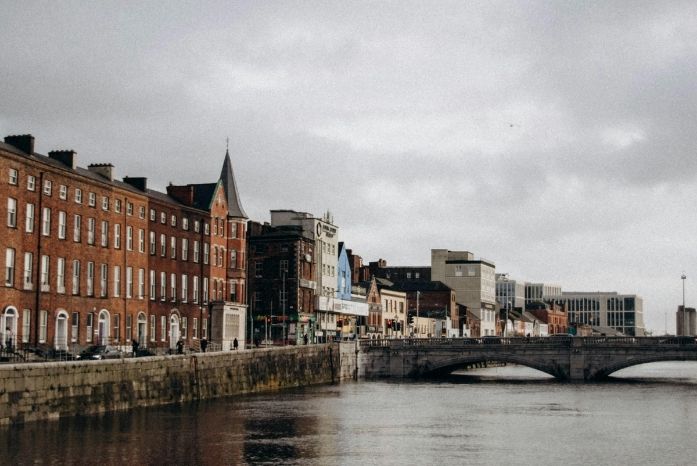
Cork and water have always had a complicated relationship. The city was, quite literally, built on it.
The central part of the city sits on an estuarine island in the Lee Valley, flanked by steep slopes on two sides and divided by the river’s two channels. It’s a beautiful setting. It’s also a geography that makes Cork uniquely vulnerable to flooding, and that vulnerability is written right through the city’s history. Between 1841 and 1988 alone, Cork recorded 292 flood events. This is not a new problem. It’s a defining one.
If you’re buying a property in Cork city or county, or you already own one, understanding flood risk isn’t alarmism. It’s just good sense.
The Two Types of Flooding That Affect Cork
Cork doesn’t just face one kind of flooding. It faces two, and the combination is what makes the city’s situation particularly complex.
Fluvial flooding comes from the River Lee breaking its banks after heavy rainfall upstream in the catchment. The Inniscarra and Carrigadrohid dams upstream of the city help regulate river flows, but they can’t eliminate the risk entirely. November 2009 proved that. After weeks of exceptional rainfall saturating the catchment, the city flooded on a scale not seen in nearly a century. The Carrigrohane Road, Victoria Cross, parts of UCC, the entire Mardyke, Washington Street, the Grand Parade, North Main Street, Wandesford Quay, Lancaster Quay, Sundays Well, and the Sarsfield Road Roundabout were all under water. Insurance payouts from the 2009 floods came to approximately €90 million, and that figure doesn’t capture the full cost of what was lost.
Tidal flooding is caused by storm surges and spring tides pushing water up the Lee estuary and into the city centre. In October 2020, a storm surge coinciding with spring tides produced some of the worst tidal flooding in Cork in a decade. The South Mall was described as a lake. Water cascaded down Oliver Plunkett Street and up through the surrounding side streets. Around 100 buildings were damaged, with costs running to millions of euros. And that event happened during a global pandemic, when businesses were already fighting for survival.
The combination of both flood types, fluvial from the west and tidal from the south, is what makes Cork’s flood risk genuinely difficult to engineer a solution for. But the work is underway.
What’s Being Done: Morrison’s Island and the Lower Lee
Cork is actively investing in flood defence right now, and it’s worth understanding what’s happening and what it means for the city.
The Morrison’s Island Public Realm and Flood Defence Scheme is currently under construction and on track for completion in late 2026. Once finished, it will protect around 400 properties in an area that has repeatedly suffered from tidal flooding, while transforming the riverside between Parnell Bridge and Parliament Bridge with new public spaces, a riverside promenade, and improved pedestrian areas.
The engineering here is worth appreciating. The existing quay walls are being cleaned, inspected, and strengthened. Flap valves are being fitted to all river outlets to stop water flowing back up through drainage pipes at high tide. An underground pumping station is being built at Parnell Plaza. Even the street furniture has been designed with purpose: planters and seating along the quays will double as flood defences, with demountable barriers that can be installed when extreme flooding is forecast.
Morrison’s Island is, however, just one piece of a much larger picture.
The Lower Lee Flood Relief Scheme is designed to protect some 900 homes and 1,200 businesses across the wider city from flooding. It is the largest flood relief investment ever proposed in Ireland. Its total cost has risen to approximately €200 million, and the scheme is expected to be submitted for statutory consent in 2026, with construction following thereafter.
These are significant, genuinely ambitious undertakings, and a real commitment to protecting Cork’s future. But large infrastructure projects take time. The flood risk is real today, and it matters most right now for anyone buying or selling property in the city.
What This Means if You’re Buying a Property in Cork
Flood risk is not uniform across Cork. Some areas carry significantly higher exposure than others: low-lying quaysides, properties near the Lee and its tributaries, parts of the docklands, and lower-lying suburbs including parts of Blackrock, Mahon, and Douglas. The question isn’t whether Cork floods. It’s whether the specific property you’re considering is in the firing line when it does.
A few things every buyer should know:
A mortgage valuation will not flag flood risk. It confirms a property’s value for lending purposes. It is not a structural or risk assessment, and it will not tell you whether the garden was under a foot of water in 2009 or 2020.
A pre-purchase survey carried out by a qualified engineer should include an assessment of flood risk indicators: evidence of previous flooding, proximity to identified flood zones, the condition of drainage, and any flood mitigation measures already in place. These are things a trained eye can spot that a standard valuation will never pick up.
The OPW Flood Maps are publicly available at floodinfo.ie and are worth checking for any property in Cork before you proceed. They’re a useful starting point, but they show community-level risk rather than individual property risk, and they should always be read alongside professional engineering advice rather than instead of it.
Properties in identified flood zones can face real challenges with home insurance costs, mortgage approval, and future resale value. Ireland doesn’t operate a state-backed flood reinsurance scheme like the UK’s Flood Re model, which means access to affordable flood cover is ultimately at the discretion of individual insurers. A buyer deserves to know all of this before signing contracts, not after.
If you’re planning a new build or an extension in an area with flood risk, planning permission will require a flood risk assessment as part of the application. An engineer can advise on whether this applies to your site and prepare the necessary documentation.
Cork is Worth Investing In
The home offices for BCE are based at the Cork Marina, on the banks of the Lee. Flood risk isn’t an abstract concept for us; it’s something we’ve watched play out across this city for years.
Cork is a city worth investing in. The flood relief works underway are a genuine reason for optimism, and the scale of the Lower Lee scheme reflects just how seriously the state is now taking this problem. But smart buyers and homeowners don’t wait for major infrastructure to complete before doing their homework.
If you’re buying a property in Cork city or county and you want an independent engineering assessment that includes a thorough flood risk evaluation, get in touch with BCE Consulting Engineers today. A pre-purchase survey could be one of the most valuable investments you make before you sign anything.

Recent Comments