If you’ve driven out past the Dunkettle interchange lately, you’ll have seen it: construction has begun on a major new development of 550 homes on the edge of Cork city. What’s telling isn’t just the scale of it. It’s how people are paying for them. Around 75% of buyers there are using the Help to Buy scheme, and 25% are using the First Home Scheme.That’s the reality of buying new in Cork right now. Most first-time buyers are leaning on at least one government scheme to get over the line, and a good number are stacking both. If you’re trying to make sense of all the acronyms, you’re not alone. This guide will explain how each scheme works, who qualifies and how they can work together.
What is the Help to Buy scheme?
The first thing to understand about Help to Buy is what it isn’t. It’s not a loan, and it’s not a grant. It’s a tax refund. Specifically, it refunds the Income Tax and DIRT (the tax on savings interest) you’ve paid over the previous four tax years and that money goes towards your deposit.The refund is capped at whichever is lower: €30,000, or 10% of the purchase price. So, on a €350,000 home, the most you could get is €30,000, while on a €250,000 home, you’d be looking at a maximum of €25,000.To qualify, you need to tick a few boxes. You must be a first-time buyer. The property must be a new build or a self-build, so second-hand homes don’t count. It must cost €500,000 or less. Your mortgage needs to cover at least 70% of the purchase price and you must live in the home as your main residence for at least five years.There’s good news on timing too. The scheme has been extended until the end of 2029, so there’s no rush to beat a deadline this year. To give a sense of scale, more than 46,000 Help to Buy claims have been approved between July 2020 and April 2026, benefitting close to 84,000 people. According to Revenue’s figures, the average value of an approved claim to date sits at around €362,700.
What is the First Home Scheme?
The First Home Scheme works in a completely different way. It’s a shared equity scheme, which means the government takes a percentage stake in your property in exchange for topping up the gap between what your mortgage and deposit can cover and what the home costs.Here’s the part that surprises people: there are no strict income caps. Instead, your eligibility is based on borrowing the maximum available to you from a participating lender, as set out in the scheme’s rules and eligibility. In other words, you apply for your full mortgage first and the scheme helps bridge whatever shortfall is left.The price ceilings are set locally, and Cork has two depending on where you’re buying. In Cork City Council areas, the ceiling is €500,000, and in Cork County Council areas it’s €450,000. So, a new build in Douglas or Blackpool falls under the city limit, while one out in Midleton or Carrigaline comes under the county figure.The participating lenders include AIB, Bank of Ireland, EBS, Haven, and PTSB. The scheme has been busy. Recent figures show more than 10,000 approvals have been issued since launch, with 1,037 in the first quarter of 2026 alone, and over €350m provided in total support. The average level of support works out at around €66,000, roughly 17% of the average purchase price of €390,000.
Can you use both schemes together?
Yes, and plenty of buyers do. In fact, national figures show around 66% of First Home Scheme users are also using Help to Buy. The two were designed to sit alongside each other.There’s one catch worth knowing. If you use both together, the maximum equity available through the First Home Scheme drops slightly, from 30% of the purchase price down to 20%. It’s a sensible rule, but it does catch people out, so it’s worth factoring in early.Here’s how it might look in practice. Say you’re buying a new build in Cork for €350,000. You claim the full €30,000 through Help to Buy towards your deposit. The First Home Scheme could then provide up to 20% of the purchase price, which is €70,000, to bridge any remaining gap between your mortgage and the price. Between the two, that’s a serious chunk of the cost covered without either one being a traditional loan from a bank.
What does this mean in practice for Cork buyers?
It means the supports are there and people are using them right now. That Dunkettle development is a live example: real buyers, this year, drawing on both schemes to buy new homes on the edge of the city.Cork is punching above its weight here too. Almost one in five First Home Scheme approvals nationally have been in Cork, which tells you how much these schemes are shaping the local market. If you’re a first-time buyer eyeing a new build anywhere from Ballincollig to Glanmire, the odds are good that one or both schemes will be part of your plan. The key is to map out your strategy early, ideally before you fall for a particular house, so you know exactly what you’re working with.
A note on getting an independent snag inspection
These schemes are brilliant for getting you through the door. But once you’re close to taking ownership of a new build, there’s one more step worth taking before you sign off.Even brand-new homes have defects. We see them regularly, from cosmetic issues like poor plastering and paint marks right through to bigger problems you’d never spot without a trained eye. That’s where an independent snag list inspection comes in. An engineer goes through the property in detail, identifies anything that isn’t finished or up to standard, and puts those issues back on the developer to fix before you accept the home. It’s a small step that protects a very big purchase.At BCE Consulting Engineers, we carry out snag list inspections on new builds across Cork City and County. We’re fully independent and members of Engineers Ireland, so the only interest we have is in giving you an honest assessment. If you’re buying a new home and want it checked properly before you take the keys, get in touch with our team today.
You find the house. It’s a Victorian terrace in one of Cork city’s older neighbourhoods, Shandon, Sunday’s Well, the Lough, with a rear extension that gives it the extra space you need. You love it. You put in an offer. It’s accepted. Then your solicitor asks a simple question: is there planning permission for that extension?
If the answer is no, or “we’re not sure”, the transaction just got more complicated.
This is one of the most common issues we flag in pre-purchase surveys of older Cork properties. It does not automatically mean you should walk away, but it does mean you need to understand what you’re dealing with before you sign anything.
What does “no planning permission” actually mean?
Not every extension needs planning permission. Under Irish planning law, smaller works can qualify as exempted development, meaning they can be carried out without applying to the local authority. For a terraced or semi-detached house, the exempted development limit for a rear extension is 12 square metres. For a detached house, it is 40 square metres.
If an extension falls within those limits and meets the other conditions set out in the planning regulations, it is technically fine without permission.
The problem is that a lot of extensions on older Cork properties don’t fall within those limits. A generous rear kitchen extension, a side return infill, a two-storey addition: these are the kinds of works that would have required planning permission. And in many cases, particularly in houses built before the 1980s, that permission was never sought. Owners extended their homes in good faith, often decades ago, without fully understanding the rules at the time.
Why is this particularly common in Cork city?
Cork city has a significant stock of older terraced housing, particularly in areas like Shandon, Blackpool, Sunday’s Well, Ballintemple, and parts of the southside. Many of these homes date back to the Victorian and Edwardian eras, and they have been extended, modified, and altered by successive owners over more than a century.
Cork City Council holds a “Blue Book“, a record of planning permissions granted from the 1960s through to the 1990s, but a lot of the extensions you will encounter on older city properties predate even that record, or were added informally during a period when planning enforcement was far less routine than it is today.
It is also worth noting that many older parts of Cork city fall within Architectural Conservation Areas. Works carried out in these areas can require planning permission even when they might otherwise qualify as exempted development elsewhere. If you are buying in a conservation area, this is something to check carefully.
What are the risks for the buyer?
This is where it gets important. Under Irish property law, the principle of caveat emptor applies. In plain terms, that means “buyer beware.” Once you sign contracts, you are taking the property as it is, including any planning issues that were there to be found.
The risks of proceeding with an unauthorised extension without addressing it include:
Mortgage lender concerns. Many lenders will not advance funds on a property with an unresolved planning issue. Your bank or mortgage provider may require evidence that the extension is either exempted development or has been regularised before they will release funds.
Title issues. Your solicitor will raise a planning query as part of the conveyancing process. If the seller cannot provide evidence that the extension is in order, this can delay or derail the sale entirely.
Difficulty reselling in future. What is a problem for you now will be a problem for the next buyer too. Leaving an unauthorised extension unresolved does not make it go away; it just passes the issue down the line.
Enforcement action. Cork City Council and Cork County Council both have the power to issue enforcement notices requiring works to be demolished or altered. While enforcement action on older extensions is relatively uncommon, it is not unheard of, and it is a risk you would be taking on as the new owner.
Insurance implications. Some insurers may be reluctant to provide full cover for an unauthorised structure or may exclude it from a claim.
Can retention planning permission solve the problem?
In many cases, yes. Retention planning permission, sometimes called retrospective planning permission, allows an owner to apply for permission after the fact, regularising a structure that was built without it.
If the extension is structurally sound, does not breach the development plan for the area, and has not caused significant harm to neighbouring properties, retention permission is often granted. Cork City Council and Cork County Council both process retention applications as part of their standard planning functions.
However, retention is not a guaranteed outcome. An extension that significantly exceeds the allowable limits, is located in a sensitive conservation area, or has caused genuine amenity issues for neighbours may not get permission. It also takes time, typically a number of months from application to decision, which can complicate the timeline of a purchase.
If retention is a condition of the sale, it is generally advisable to either have the seller apply for it before contracts are exchanged, or to negotiate a price reduction that reflects the cost and risk of dealing with it yourself.
What does a pre-purchase survey pick up that a solicitor won’t?
Your solicitor will raise a planning query in the course of the conveyancing process, but their role is to review documentation. If there is no planning file for an extension, they can flag its absence. What they cannot do is assess the physical structure itself.
That is where a pre-purchase survey comes in. A structural engineer will examine the extension on site and can identify signs that a structure was built without proper oversight: walls that do not match the construction method of the original house, roof tie-ins that are poorly detailed, a lack of cavity wall insulation where modern standards would require it, or structural elements that were not designed by an engineer.
This matters because an unauthorised extension is not just a planning problem. It can also be a structural one. Knowing what you are dealing with before you commit gives you options: you can negotiate, you can ask the seller to regularise it, or in some cases you can make an informed decision to walk away.
We have carried out hundreds of pre-purchase surveys across Cork city and county, and planning issues with rear extensions are among the most common findings, particularly in the older terraced housing that makes up so much of the city’s residential stock.
Should you walk away?
Not necessarily. An unauthorised extension is a problem that can, in many cases, be resolved. What matters is that you know about it before you sign contracts, not after.
If you are buying a property in Cork and want an independent assessment before you sign anything, get in touch with our team today.
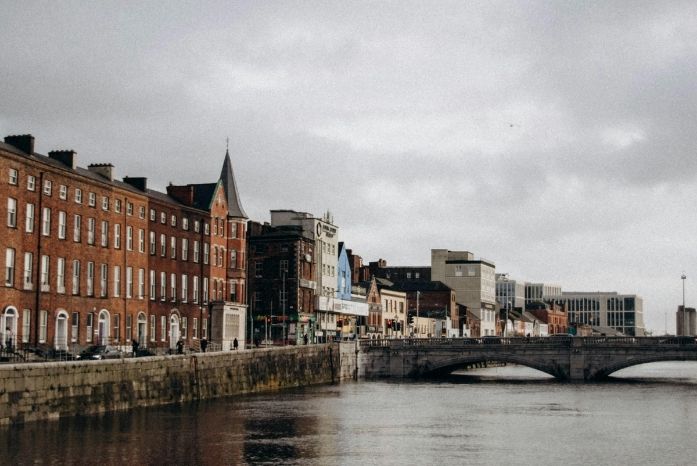
Cork and water have always had a complicated relationship. The city was, quite literally, built on it.
The central part of the city sits on an estuarine island in the Lee Valley, flanked by steep slopes on two sides and divided by the river’s two channels. It’s a beautiful setting. It’s also a geography that makes Cork uniquely vulnerable to flooding, and that vulnerability is written right through the city’s history. Between 1841 and 1988 alone, Cork recorded 292 flood events. This is not a new problem. It’s a defining one.
If you’re buying a property in Cork city or county, or you already own one, understanding flood risk isn’t alarmism. It’s just good sense.
The Two Types of Flooding That Affect Cork
Cork doesn’t just face one kind of flooding. It faces two, and the combination is what makes the city’s situation particularly complex.
Fluvial flooding comes from the River Lee breaking its banks after heavy rainfall upstream in the catchment. The Inniscarra and Carrigadrohid dams upstream of the city help regulate river flows, but they can’t eliminate the risk entirely. November 2009 proved that. After weeks of exceptional rainfall saturating the catchment, the city flooded on a scale not seen in nearly a century. The Carrigrohane Road, Victoria Cross, parts of UCC, the entire Mardyke, Washington Street, the Grand Parade, North Main Street, Wandesford Quay, Lancaster Quay, Sundays Well, and the Sarsfield Road Roundabout were all under water. Insurance payouts from the 2009 floods came to approximately €90 million, and that figure doesn’t capture the full cost of what was lost.
Tidal flooding is caused by storm surges and spring tides pushing water up the Lee estuary and into the city centre. In October 2020, a storm surge coinciding with spring tides produced some of the worst tidal flooding in Cork in a decade. The South Mall was described as a lake. Water cascaded down Oliver Plunkett Street and up through the surrounding side streets. Around 100 buildings were damaged, with costs running to millions of euros. And that event happened during a global pandemic, when businesses were already fighting for survival.
The combination of both flood types, fluvial from the west and tidal from the south, is what makes Cork’s flood risk genuinely difficult to engineer a solution for. But the work is underway.
What’s Being Done: Morrison’s Island and the Lower Lee
Cork is actively investing in flood defence right now, and it’s worth understanding what’s happening and what it means for the city.
The Morrison’s Island Public Realm and Flood Defence Scheme is currently under construction and on track for completion in late 2026. Once finished, it will protect around 400 properties in an area that has repeatedly suffered from tidal flooding, while transforming the riverside between Parnell Bridge and Parliament Bridge with new public spaces, a riverside promenade, and improved pedestrian areas.
The engineering here is worth appreciating. The existing quay walls are being cleaned, inspected, and strengthened. Flap valves are being fitted to all river outlets to stop water flowing back up through drainage pipes at high tide. An underground pumping station is being built at Parnell Plaza. Even the street furniture has been designed with purpose: planters and seating along the quays will double as flood defences, with demountable barriers that can be installed when extreme flooding is forecast.
Morrison’s Island is, however, just one piece of a much larger picture.
The Lower Lee Flood Relief Scheme is designed to protect some 900 homes and 1,200 businesses across the wider city from flooding. It is the largest flood relief investment ever proposed in Ireland. Its total cost has risen to approximately €200 million, and the scheme is expected to be submitted for statutory consent in 2026, with construction following thereafter.
These are significant, genuinely ambitious undertakings, and a real commitment to protecting Cork’s future. But large infrastructure projects take time. The flood risk is real today, and it matters most right now for anyone buying or selling property in the city.
What This Means if You’re Buying a Property in Cork
Flood risk is not uniform across Cork. Some areas carry significantly higher exposure than others: low-lying quaysides, properties near the Lee and its tributaries, parts of the docklands, and lower-lying suburbs including parts of Blackrock, Mahon, and Douglas. The question isn’t whether Cork floods. It’s whether the specific property you’re considering is in the firing line when it does.
A few things every buyer should know:
A mortgage valuation will not flag flood risk. It confirms a property’s value for lending purposes. It is not a structural or risk assessment, and it will not tell you whether the garden was under a foot of water in 2009 or 2020.
A pre-purchase survey carried out by a qualified engineer should include an assessment of flood risk indicators: evidence of previous flooding, proximity to identified flood zones, the condition of drainage, and any flood mitigation measures already in place. These are things a trained eye can spot that a standard valuation will never pick up.
The OPW Flood Maps are publicly available at floodinfo.ie and are worth checking for any property in Cork before you proceed. They’re a useful starting point, but they show community-level risk rather than individual property risk, and they should always be read alongside professional engineering advice rather than instead of it.
Properties in identified flood zones can face real challenges with home insurance costs, mortgage approval, and future resale value. Ireland doesn’t operate a state-backed flood reinsurance scheme like the UK’s Flood Re model, which means access to affordable flood cover is ultimately at the discretion of individual insurers. A buyer deserves to know all of this before signing contracts, not after.
If you’re planning a new build or an extension in an area with flood risk, planning permission will require a flood risk assessment as part of the application. An engineer can advise on whether this applies to your site and prepare the necessary documentation.
Cork is Worth Investing In
The home offices for BCE are based at the Cork Marina, on the banks of the Lee. Flood risk isn’t an abstract concept for us; it’s something we’ve watched play out across this city for years.
Cork is a city worth investing in. The flood relief works underway are a genuine reason for optimism, and the scale of the Lower Lee scheme reflects just how seriously the state is now taking this problem. But smart buyers and homeowners don’t wait for major infrastructure to complete before doing their homework.
If you’re buying a property in Cork city or county and you want an independent engineering assessment that includes a thorough flood risk evaluation, get in touch with BCE Consulting Engineers today. A pre-purchase survey could be one of the most valuable investments you make before you sign anything.
To provide the best experiences, we use technologies like cookies to store and/or access device information. Consenting to these technologies will allow us to process data such as browsing behavior or unique IDs on this site. Not consenting or withdrawing consent, may adversely affect certain features and functions.
Functional
Always active
The technical storage or access is strictly necessary for the legitimate purpose of enabling the use of a specific service explicitly requested by the subscriber or user, or for the sole purpose of carrying out the transmission of a communication over an electronic communications network.
Preferences
The technical storage or access is necessary for the legitimate purpose of storing preferences that are not requested by the subscriber or user.
Statistics
The technical storage or access that is used exclusively for statistical purposes.The technical storage or access that is used exclusively for anonymous statistical purposes. Without a subpoena, voluntary compliance on the part of your Internet Service Provider, or additional records from a third party, information stored or retrieved for this purpose alone cannot usually be used to identify you.
Marketing
The technical storage or access is required to create user profiles to send advertising, or to track the user on a website or across several websites for similar marketing purposes.




Recent Comments