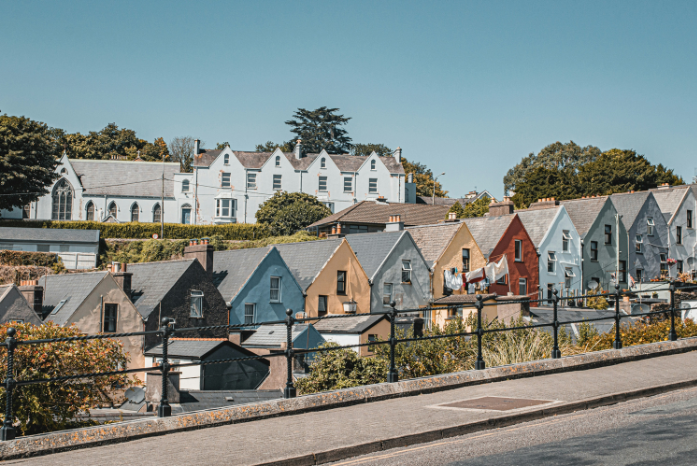
If you’ve driven out past the Dunkettle interchange lately, you’ll have seen it: construction has begun on a major new development of 550 homes on the edge of Cork city. What’s telling isn’t just the scale of it. It’s how people are paying for them. Around 75% of buyers there are using the Help to Buy scheme, and 25% are using the First Home Scheme.  That’s the reality of buying new in Cork right now. Most first-time buyers are leaning on at least one government scheme to get over the line, and a good number are stacking both. If you’re trying to make sense of all the acronyms, you’re not alone. This guide will explain how each scheme works, who qualifies and how they can work together. 

What is the Help to Buy scheme? 

The first thing to understand about Help to Buy is what it isn’t. It’s not a loan, and it’s not a grant. It’s a tax refund. Specifically, it refunds the Income Tax and DIRT (the tax on savings interest) you’ve paid over the previous four tax years and that money goes towards your deposit.  The refund is capped at whichever is lower: €30,000, or 10% of the purchase price. So, on a €350,000 home, the most you could get is €30,000, while on a €250,000 home, you’d be looking at a maximum of €25,000.  To qualify, you need to tick a few boxes. You must be a first-time buyer. The property must be a new build or a self-build, so second-hand homes don’t count. It must cost €500,000 or less. Your mortgage needs to cover at least 70% of the purchase price and you must live in the home as your main residence for at least five years.  There’s good news on timing too. The scheme has been extended until the end of 2029, so there’s no rush to beat a deadline this year. To give a sense of scale, more than 46,000 Help to Buy claims have been approved between July 2020 and April 2026, benefitting close to 84,000 people. According to Revenue’s figures, the average value of an approved claim to date sits at around €362,700. 

What is the First Home Scheme? 

The First Home Scheme works in a completely different way. It’s a shared equity scheme, which means the government takes a percentage stake in your property in exchange for topping up the gap between what your mortgage and deposit can cover and what the home costs.  Here’s the part that surprises people: there are no strict income caps. Instead, your eligibility is based on borrowing the maximum available to you from a participating lender, as set out in the scheme’s rules and eligibility. In other words, you apply for your full mortgage first and the scheme helps bridge whatever shortfall is left.  The price ceilings are set locally, and Cork has two depending on where you’re buying. In Cork City Council areas, the ceiling is €500,000, and in Cork County Council areas it’s €450,000. So, a new build in Douglas or Blackpool falls under the city limit, while one out in Midleton or Carrigaline comes under the county figure.  The participating lenders include AIB, Bank of Ireland, EBS, Haven, and PTSB. The scheme has been busy. Recent figures show more than 10,000 approvals have been issued since launch, with 1,037 in the first quarter of 2026 alone, and over €350m provided in total support. The average level of support works out at around €66,000, roughly 17% of the average purchase price of €390,000. 

Can you use both schemes together? 

Yes, and plenty of buyers do. In fact, national figures show around 66% of First Home Scheme users are also using Help to Buy. The two were designed to sit alongside each other.  There’s one catch worth knowing. If you use both together, the maximum equity available through the First Home Scheme drops slightly, from 30% of the purchase price down to 20%. It’s a sensible rule, but it does catch people out, so it’s worth factoring in early.  Here’s how it might look in practice. Say you’re buying a new build in Cork for €350,000. You claim the full €30,000 through Help to Buy towards your deposit. The First Home Scheme could then provide up to 20% of the purchase price, which is €70,000, to bridge any remaining gap between your mortgage and the price. Between the two, that’s a serious chunk of the cost covered without either one being a traditional loan from a bank. 

What does this mean in practice for Cork buyers? 

It means the supports are there and people are using them right now. That Dunkettle development is a live example: real buyers, this year, drawing on both schemes to buy new homes on the edge of the city.  Cork is punching above its weight here too. Almost one in five First Home Scheme approvals nationally have been in Cork, which tells you how much these schemes are shaping the local market. If you’re a first-time buyer eyeing a new build anywhere from Ballincollig to Glanmire, the odds are good that one or both schemes will be part of your plan. The key is to map out your strategy early, ideally before you fall for a particular house, so you know exactly what you’re working with. 

A note on getting an independent snag inspection 

These schemes are brilliant for getting you through the door. But once you’re close to taking ownership of a new build, there’s one more step worth taking before you sign off.  Even brand-new homes have defects. We see them regularly, from cosmetic issues like poor plastering and paint marks right through to bigger problems you’d never spot without a trained eye. That’s where an independent snag list inspection comes in. An engineer goes through the property in detail, identifies anything that isn’t finished or up to standard, and puts those issues back on the developer to fix before you accept the home. It’s a small step that protects a very big purchase.  At BCE Consulting Engineers, we carry out snag list inspections on new builds across Cork City and County. We’re fully independent and members of Engineers Ireland, so the only interest we have is in giving you an honest assessment. If you’re buying a new home and want it checked properly before you take the keys, get in touch with our team today.